01 — Define what rare means
Be precise about the story you tell.
A plant may be uncommon in local restaurants while remaining widely cultivated elsewhere. A particular cultivar may be difficult to purchase even though the species is not threatened. A wild population may be under pressure for reasons entirely unrelated to the restaurant trade. These are different situations, and describing all of them as “rare” can obscure the care each requires.
Use plain language in menus and staff briefings. “Grown in our conservatory” is a claim about location. “Maintained from a named supplier’s cutting” is a claim about provenance. Neither establishes conservation value. If a restaurant wishes to support conservation, it needs an appropriate partner, a defined objective and evidence of the contribution rather than a decorative narrative attached to a garnish.
02 — Keep the source attached
Provenance is a chain, not a mood.
Provenance means the documented origin and history of material. For a small restaurant collection, a useful record includes the supplier, acquisition date, botanical name, cultivar, propagation method and any restrictions supplied with the plant. Keep invoices and relevant plant-health documents connected to that record. When material moves to another pot, its identity must move with it.
Avoid wild collection without the necessary knowledge, permissions and legal checks. Landowner permission alone may not satisfy species protection, export, import or access requirements. International movement of plants can involve phytosanitary rules, and some taxa are regulated by CITES, the Convention on International Trade in Endangered Species of Wild Fauna and Flora. Check current requirements with competent authorities before obtaining material, not after it arrives.
New plants can carry pests or pathogens even when they look healthy. Use an appropriate isolation and inspection process, tailored to the risk and local guidance. Keep incoming ornamental material away from the culinary harvest route. A gift from a knowledgeable friend still requires identity and production-history checks; personal trust is not a substitute for a food-use record.
03 — Propagate with an honest label
Keeping a plant alive is not always keeping it unchanged.
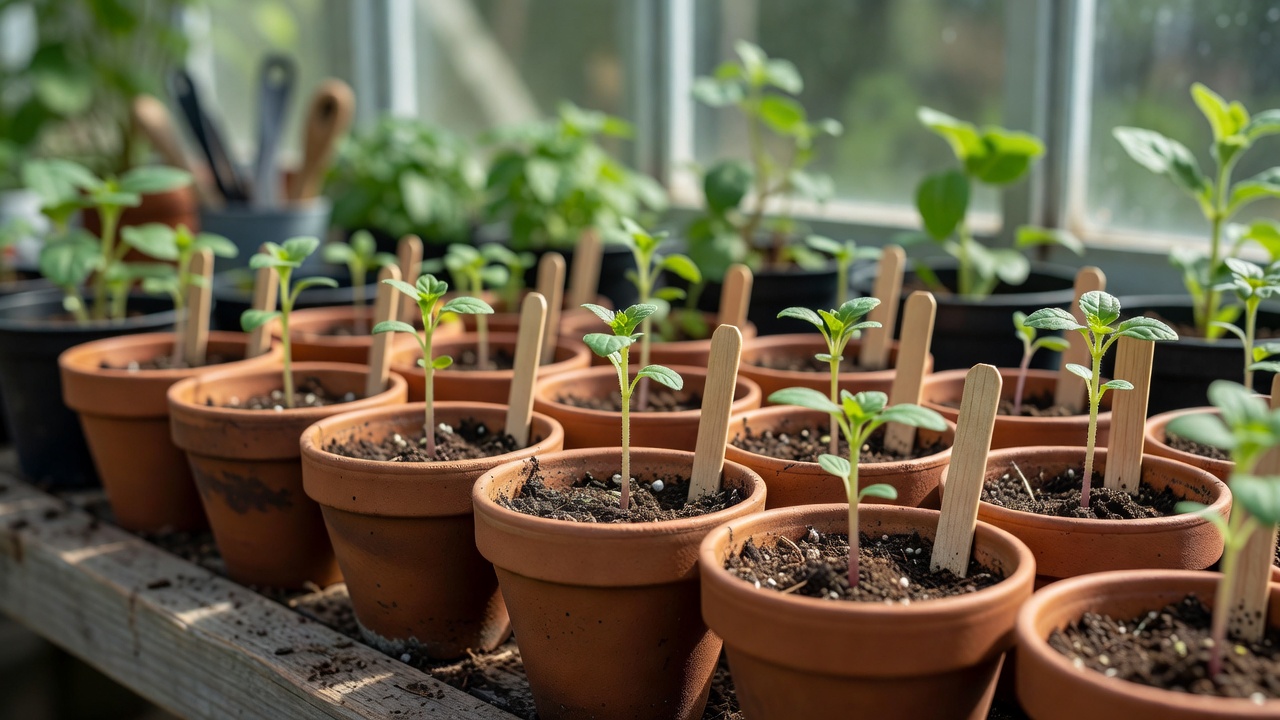
Vegetative propagation, such as suitable stem cuttings, generally preserves the genetic identity of the parent plant. Seed propagation introduces different questions: pollination, parentage and variation may affect whether offspring remain true to a named cultivar. Do not sell or share seedlings under a cultivar name merely because the seed came from a plant carrying that label.
Keep mother plants separate from heavy harvest where practical, and monitor them for health. A cutting can carry a pathogen as efficiently as it carries a desirable aroma. Record which parent supplied each propagation batch and when it was taken. Remove failed material safely and investigate recurring problems before producing more of the same compromised stock.
Seed-saving organisations offer useful context for maintaining diversity. Irish Seed Savers Association and Seed Savers Exchange are established examples, while Slow Food’s Ark of Taste documents traditional foods at risk of disappearing. These resources have different remits and should not be treated as interchangeable certification systems. Read the actual purpose of a project before using its name to support a restaurant claim.
04 — Separate lawful food use from horticulture
A thriving plant may still be the wrong ingredient.
A nursery can lawfully sell a plant for ornamental interest without establishing that every part is appropriate for food. Likewise, evidence of traditional use in one place does not automatically settle its regulatory status in another. In the European Union, Regulation (EU) 2015/2283 governs novel foods. A business considering an unfamiliar ingredient should investigate the specific species, part, preparation and use with suitable professional guidance.
The European Food Safety Authority contributes scientific assessments within the European food-safety system, but a search result or a plant’s absence from a warning list is not permission to serve it. Consult relevant authorities and authoritative documentation. Keep uncertainty visible in the collection record and prevent uncertain material from reaching routine harvest.
Respect cultural knowledge as well. If a herb has a long culinary history in a particular community, describe that history carefully and credit reliable sources. Avoid presenting it as a restaurant discovery simply because it is new to the chef. Botanical curiosity is strongest when it recognises how much knowledge already exists.
05 — Measure the resources behind the leaf
On-site does not automatically mean low-impact.
A restaurant conservatory may reduce some packaging or transport, but heating, lighting, substrate, irrigation and crop losses also matter. Keep simple records of energy, water and usable harvest before making environmental comparisons. Be clear about the boundary of any calculation: a growing room measured without its winter heating presents an incomplete picture.
Review the collection regularly. Retain plants with a genuine culinary, educational or propagation purpose; reconsider those that consume substantial resources while producing little useful material. Responsible stewardship can mean growing fewer species well. It can also mean buying from a skilled local producer rather than maintaining a difficult crop in an unsuitable room.
Botanic Gardens Conservation International provides a wider view of plant conservation and living collections. Its work is a useful reminder that careful labels, shared knowledge and sustained care matter more than novelty alone. A restaurant need not become a conservation institution to borrow that disciplined attitude.