01 — Map the room
Daylight has a geography.
Walk the proposed growing space at different times of day before filling it with plants. Note direct sunlight, persistent shade, cold glazing, warm equipment and the route used by kitchen staff. A bench that looks bright at lunchtime may receive little useful light during the rest of the day. Nearby buildings and seasonal sun angles can alter the pattern enough to change which crops are dependable.
Use observations and appropriate measurements together. Photos taken from a consistent position can reveal shade changes, while a suitable light meter provides information that human eyes cannot reliably judge. Photosynthetic photon flux density describes the rate of plant-relevant light arriving at a surface; daily light integral describes the accumulated amount over a day. These terms help frame a discussion with a growing specialist, but there is no single target that suits every herb.
If supplemental lighting is needed, consider electrical safety, heat, operating hours and energy use before buying equipment. A light above one plant may leave its neighbour shaded. Keep the installation serviceable and separate electrical connections from irrigation splash. Do not promise year-round supply until the system has been observed through the difficult season.
02 — Group by growing needs
The root zone is its own environment.
The root zone includes the substrate, moisture, dissolved nutrients, temperature and air surrounding roots. A room can feel comfortable while a saturated pot remains cold and poorly aerated. Check the container itself rather than relying only on room temperature or the appearance of the upper leaves. Roots need an appropriate balance of water and oxygen; persistent wetness is not the same as reliable irrigation.
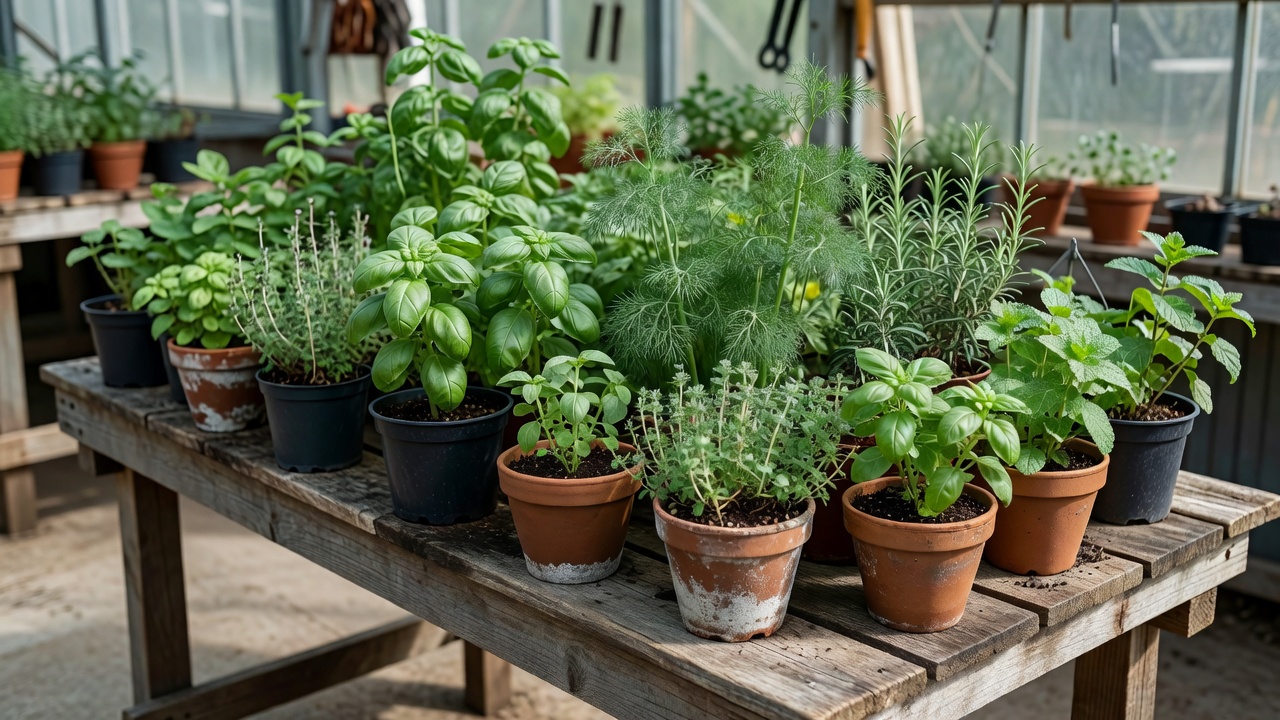
Group plants with compatible requirements. Mediterranean herbs such as thyme, Thymus vulgaris, often need a different moisture regime from warm-growing leafy herbs. That does not make one universal “dry bench” or “wet bench” recipe sufficient. Pot size, substrate structure, plant age and local conditions all change how quickly a container dries. Keep individual labels accessible even when plants share a tray.
Substrate
The material in which roots grow. Its structure controls drainage, water retention and air space; it is not merely a support that holds the plant upright.
Drainage
The movement of excess water away from roots. A drainage hole helps only if water can actually leave the container and does not collect around its base.
03 — Make irrigation observable
Water to a condition, not a habit.
A fixed watering time can support staff routines, but it should trigger an inspection rather than automatic watering of every pot. Compare container weight, substrate moisture and plant condition. Document what each method can and cannot tell you: a dry-looking surface may conceal wet material below, while a wilting leaf may reflect root damage rather than simple thirst.
Use water suitable for its intended food-production role and assess storage, tanks, hoses and emitters as part of the hygiene system. Recirculating systems require particular attention because a problem can travel between plants. Hydroponics means growing with a nutrient solution rather than relying on soil for nutrition; it does not mean that the crop is sterile or exempt from food-safety controls.
When measuring nutrient solution, electrical conductivity indicates its overall ability to conduct electricity, not the identity or balance of every nutrient present. Record pH and conductivity only with instruments that are maintained and interpreted appropriately. Do not correct a suspected deficiency by adding multiple products without first checking roots, water quality and the accuracy of the diagnosis.
04 — Keep air and work moving
Ventilation is not a substitute for spacing.
Dense foliage can remain damp even in a room with a fan. Give plants enough space for inspection and airflow, and remove failing material promptly. Avoid directing dusty air or condensation towards a harvest bench. Keep propagation, potting and food handling distinct: opening substrate bags beside ready-to-use leaves creates an unnecessary contamination route.
Inspect leaf undersides and growing tips regularly. Integrated pest management begins with observation, exclusion and proportionate action rather than routine spraying. Record the pest, location and response. Any crop-protection product must be authorised for the actual crop and use in the relevant jurisdiction, with its directions and harvest restrictions followed. A product marketed as natural is not automatically suitable for edible plants.
05 — Plan the seasonal handover
Let the menu acknowledge the season.
In spring, review light changes and introduce new plants through an appropriate inspection and isolation process. In summer, watch for overheating and faster water demand rather than assuming stronger sun always improves growth. In autumn, revise harvest expectations before the benches lose momentum. In winter, protect essential stock and reduce menu dependence on plants that are resting or growing slowly.
Assign responsibility for weekends, holidays and equipment failures. A short written handover should identify the plants needing attention, the expected harvest and the person authorised to respond to a problem. Good conservatory design includes these human systems. The most sophisticated irrigation controller cannot replace a named person noticing that a drain is blocked.